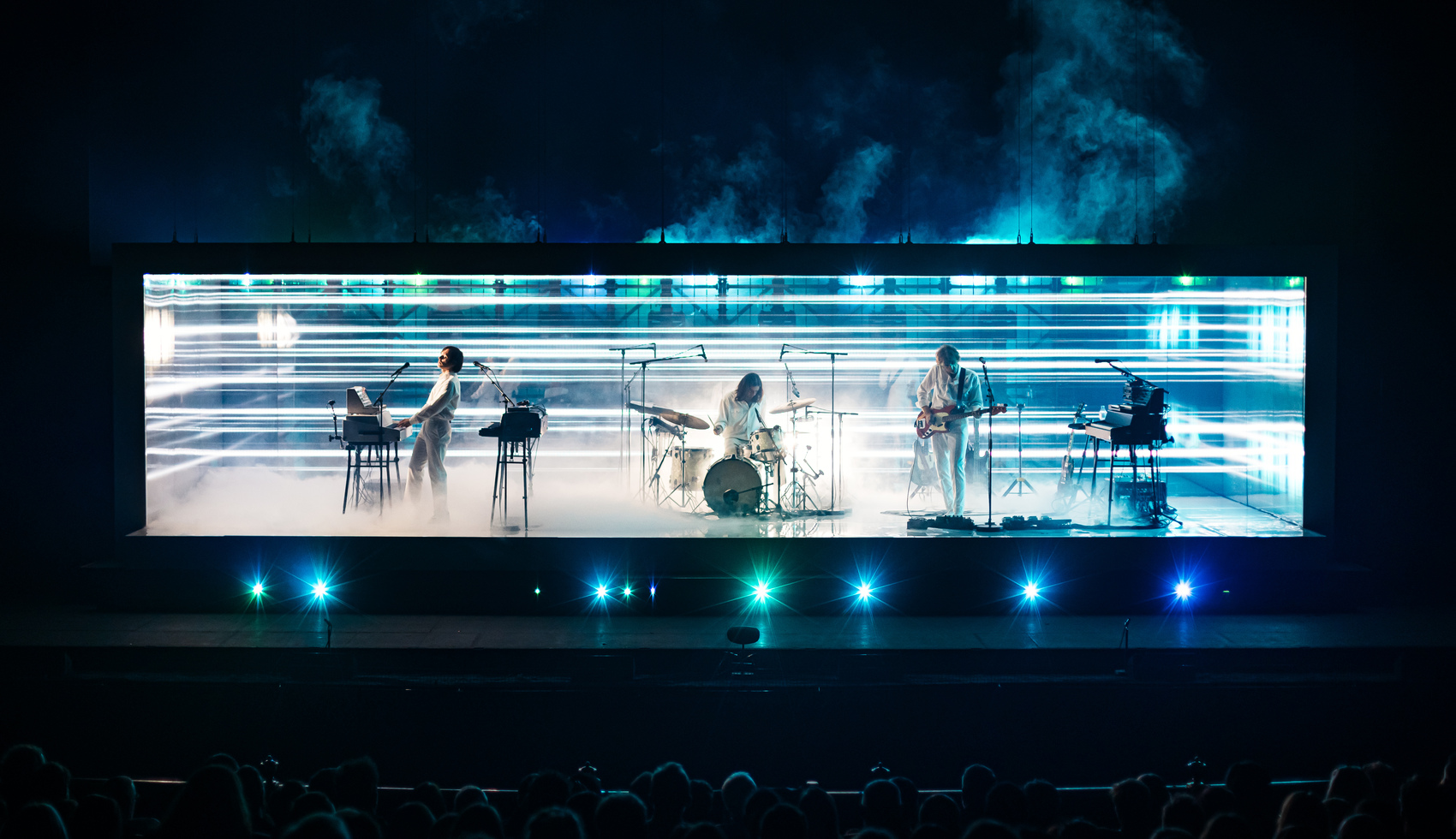
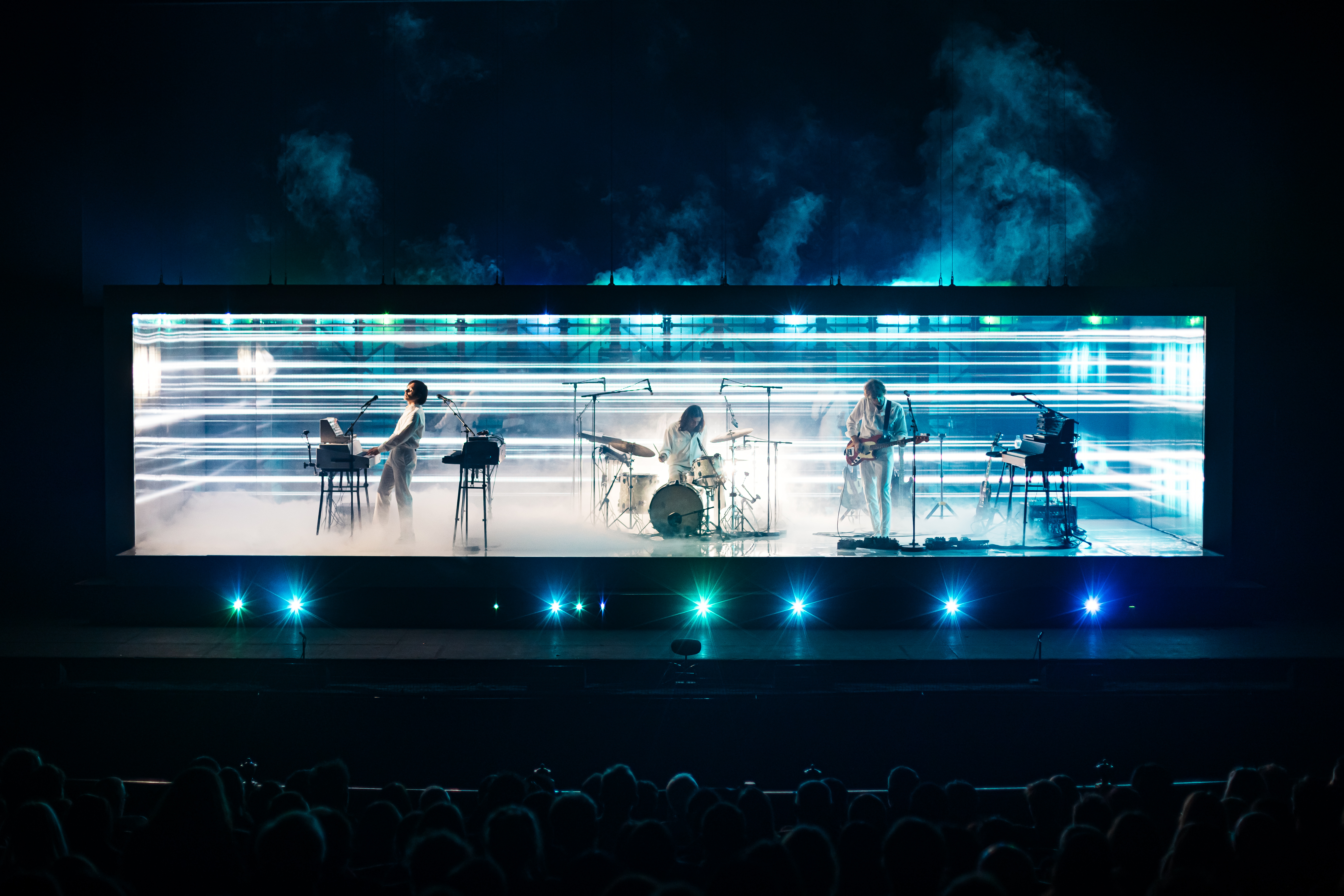
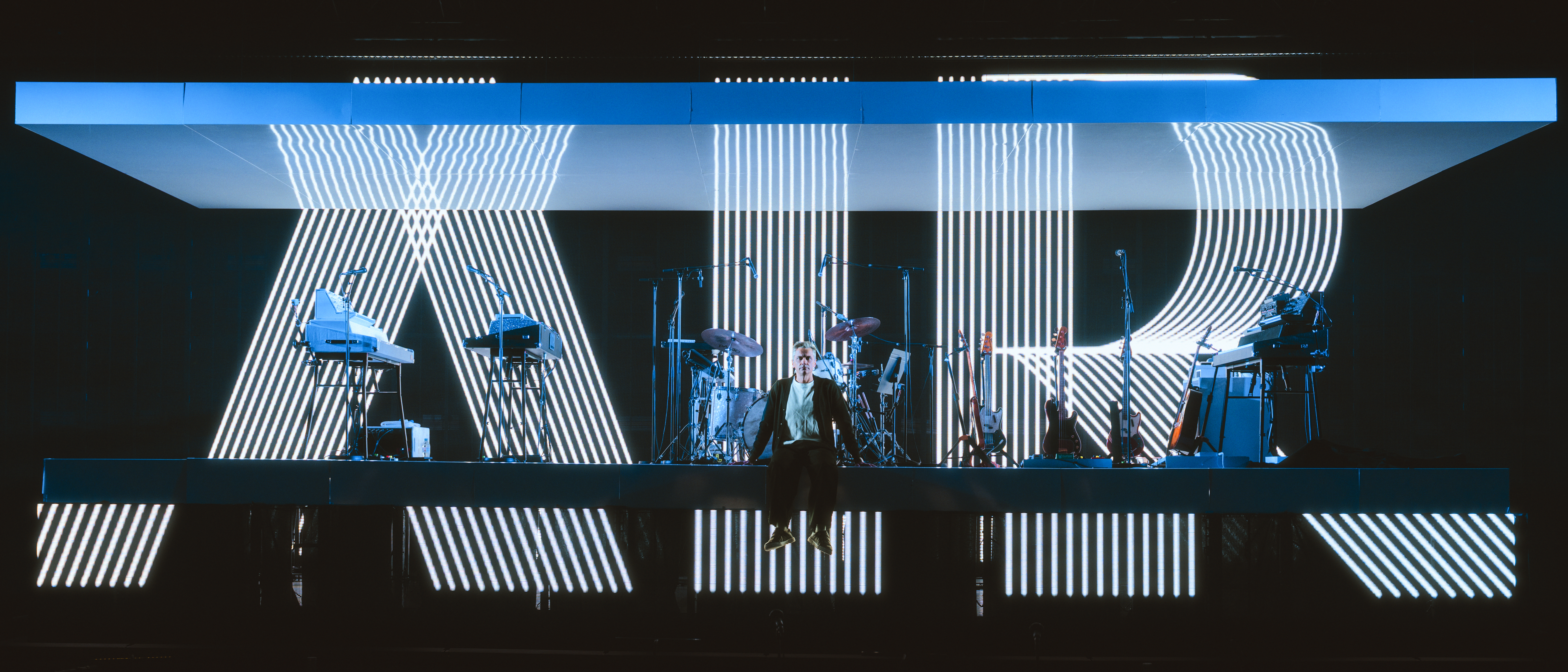
For the 25th anniversary of Moon Safari, French electronic duo AIR embarked on a two-year global tour built around performing its debut album in sequence while preserving the character and detail of the original studio recordings. Across 124 shows on five continents, including performances at the Sydney Opera House, Hollywood Bowl, Red Rocks, Royal Albert Hall and Odeon of Herodes Atticus, the production needed to maintain that sonic consistency while allowing the musicians to remain connected to the acoustic environment of each venue. In-ear engineer Julien Vouillon sought to move beyond conventional monitoring by creating a natural binaural environment that combined the precision of the album mixes with the spatial cues and ambience of performing on stage.
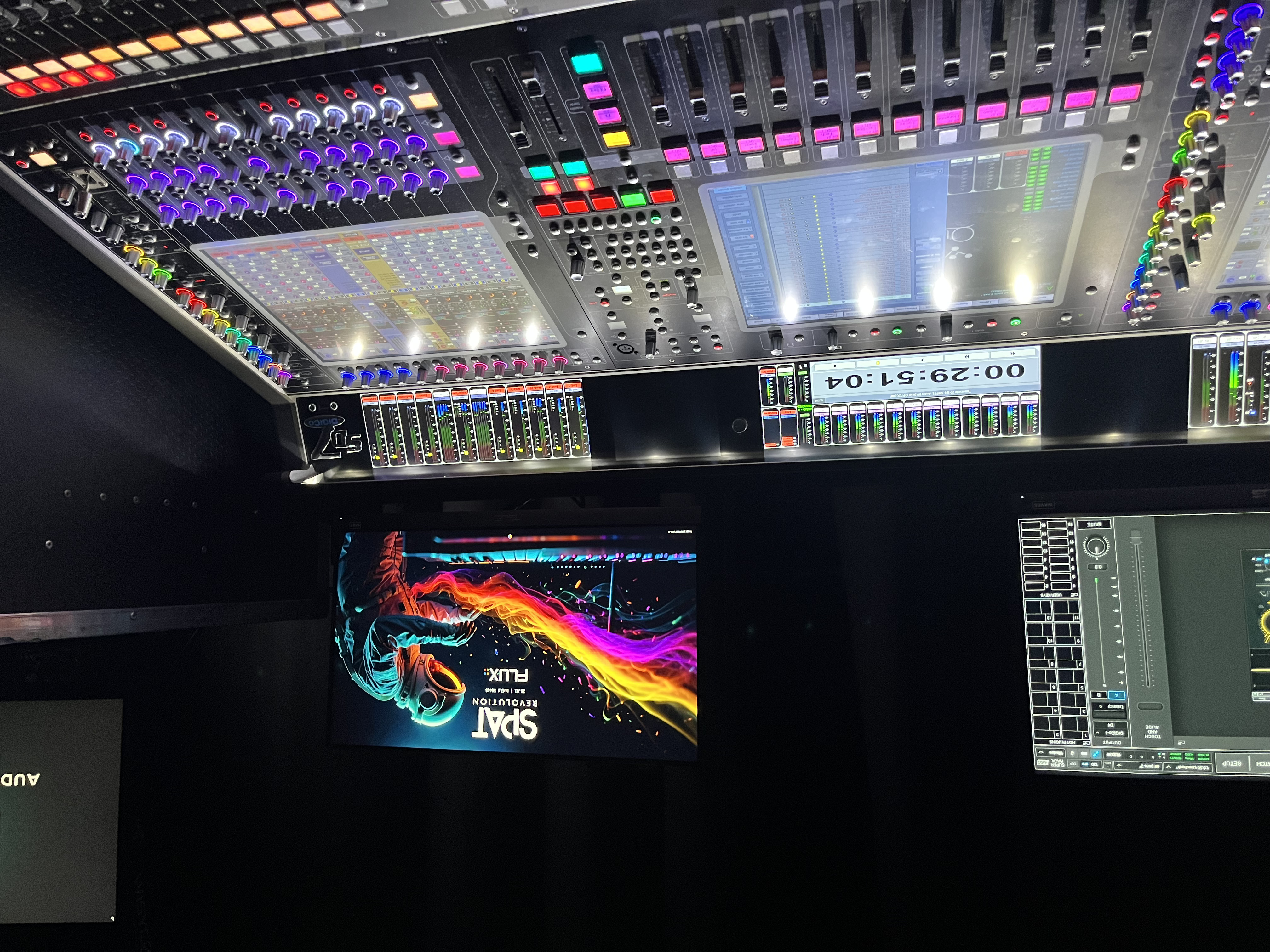
Vouillon and teammate Florentin Convert developed a MIDI-controlled touring infrastructure that automated instruments and outboard processing while allowing AIR to perform with the same instruments used on Moon Safari. For monitoring, Vouillon integrated the FLUX:: SPAT Revolution real-time immersive audio engine to add spatial depth and venue ambience to the band’s in-ear mixes.
“I was really impressed by the sound of the software’s audio engine,” Vouillon said. “The very low latency and the ability to choose the HRTF made SPAT Revolution appear as the optimal choice for this application.”
Working with mobile 5.1 surround microphones adapted for concert use, Vouillon used SPAT Revolution to position captured ambience within a virtual space. The system’s 1 ms latency and customizable HRTF supported a binaural monitoring environment designed to reproduce natural spatial cues without creating an exaggerated immersive effect.
Vouillon configured three independent virtual rooms within SPAT Revolution: a main room, a stage room and an applause room. Each was returned to the monitor console as a stereo-binaural bus, allowing the spatial information to be blended with the musical elements of the in-ear mix.
“The most important thing in adding an immersive aspect to in-ear monitors is not to create an exaggerated effect, but rather to stay realistic,” he said. “The goal is to make the mix feel completely natural to the brain.”
The SPAT Revolution workflow gave AIR a consistent yet venue-specific monitoring environment throughout 124 performances, combining the detail of the Moon Safari studio mixes with the spatial character of venues across Europe, North America, South America, Asia and Australia. By incorporating room ambience directly into the binaural mix, the system allowed the musicians to remain connected to the audience, stage and surrounding acoustics while using in-ear monitors.
As Vouillon described the experience, “the presence of the in-ear monitors is no longer felt. The brain, instead, experiences the sensation of being on stage, immersed in the venue’s acoustics.”
The monitoring workflow also became the foundation for AIR’s first live album, recorded at the Odeon of Herodes Atticus using Vouillon’s live stereo monitor mix. Through FLUX:: SPAT Revolution’s real-time processing, low latency and adjustable HRTF, Vouillon developed an immersive in-ear approach that supported AIR’s goal of carrying the sonic identity of Moon Safari from the studio to stages around the world.

