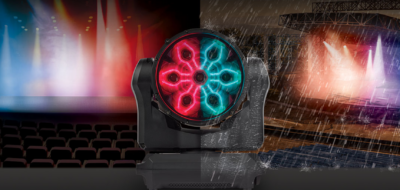
Wouldn’t the ultimate moving head lighting fixture be one you could use indoors or out, in noisy or quiet environments, yet experience no relative changes in weight, size, or lumen output? From concert stages to TV studios and EDM festivals to opera houses, Martin’s exclusive XIP smart weatherproofing technology opens up a world of endless applications and possibilities.
Unlike anything on the market, XIP technology ensures that Martin MAC Viper XIP, MAC Aura XIP, and future XIP-enabled products can be used for temporary outdoor installations in rain, snow, sand, dust, or ice, with near zero impact on product attributes and performance.
In discussion with Niels Rasmussen, Senior Principal Engineer and Innovation Lead for Martin Research and Development, we took a deep dive into XIP technology to better understand how rental/touring, festival, theater, and broadcast customers can experience maximum ROI, uptime, and ease of serviceability with these incredibly versatile workhorses.

Discover the top 10 reasons why XIP smart weatherproofing technology is perfect for a wide range of indoor and temporary outdoor applications.
How does XIP technology work?
First, let’s discuss the two approaches to weatherproofing a professional lighting fixture. Either you seal the fixture completely so that nothing can ingress the product, which normally adds weight, and reduces output or you develop a system that doesn’t affect those areas by ventilating the fixture while ensuring rain or dust will not impact functionality or damage the product in any way.
Both approaches have their pros and cons but through thousands of hours of testing and research, Martin has chosen the ventilated approach because it delivers the best mix of usability and customer benefit. Ultimately, customers will experience a nearly similar experience as using our indoor-rated fixtures – relatively the same weight, output, and same or better serviceability but with the added benefit of weatherproofing.
This greatly expands usability options for festivals and similar temporary outdoor applications without worrying that rain or dust will affect performance or service life.
We have invented and patented a technology that includes a variety of techniques, including a set of “water traps” at every enclosure opening as well as ensuring the technology is primarily incorporated into existing components, which means no additional cost.
See How Martin’s XIP Weatherproofing Is Put to the Test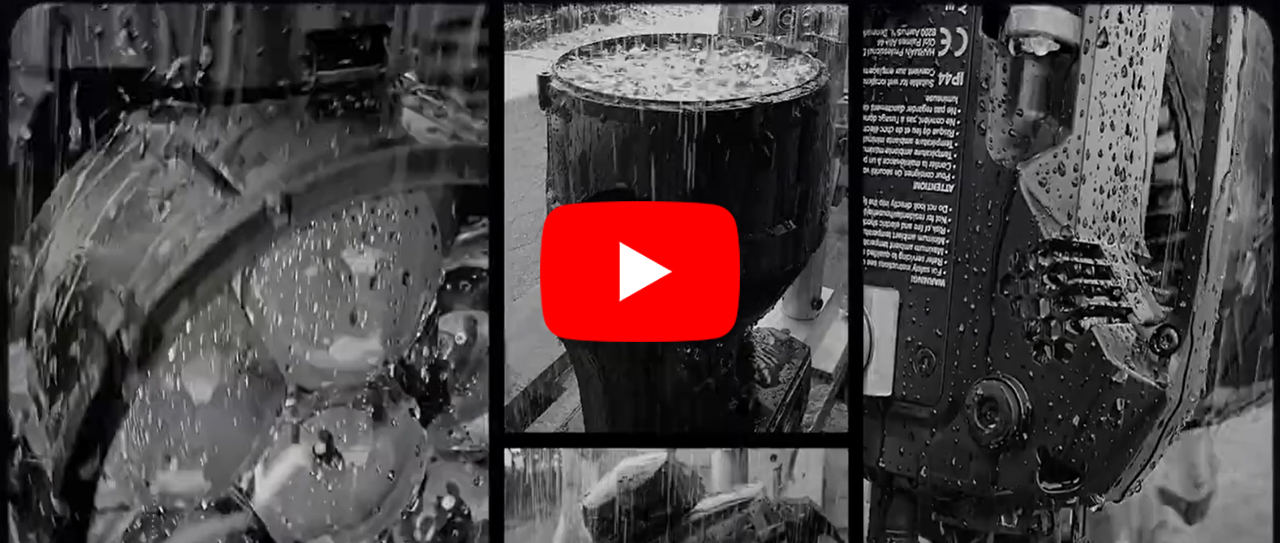
We also invented a fan inlet/outlet system that efficiently circulates air but again, prevents water droplets and dust from entering the product. The system has been proven to work although our fixtures can be rigged in almost any orientation and spin on two axes.
Additionally, we have included easily replaceable dust filters. It was definitely a complex system to build but we proved it could be done with some unique inventions and innovations.
How does XIP technology assist with managing condensation and ensuring ease of serviceability?
In engineering our IP65-rated products, we realized early on that managing condensation is always going to be a tricky challenge. Anyone familiar with electronics is always concerned with condensation and with XIP we address it in multiple ways. First, we coat our circuit boards to prevent corrosion and short-circuiting. In addition, we developed a ventilated system that ensures condensation and humid air is quickly evaporated and dissipated when the fixture is powered and begins naturally warming up.

The new Martin MAC Viper XIP combines legendary Viper performance and XIP smart weatherproofing technology. Watch the video. Get product details.
Serviceability and modularity have always been a signature of Martin products. Our XIP-enabled products are just as easily serviceable as our indoor products, unlike fully-sealed fixtures that require many more screws, certified technicians, and follow-up vacuum testing.
With XIP products, only a few screws are required and customers have the same easy access to the optical modules as with most indoor-rated fixtures. With XIP, we wanted to continue our commitment to empowering customers to receive maximum uptime and easy serviceability.
XIP technology first appeared in the MAC Aura XIP, what inspired its development?
My colleague Claus Hansen and I have discussed this versatile weatherproofing idea for many years. With a few efficient upgrades, how could we add remarkable weather-robustness to our IP20 moving heads, especially for the touring market?
We both have over 25 years of experience with Martin and have seen how our products have been used successfully at festivals and other outdoor applications, even though they were only IP20-rated and not made for outdoor use. So, we knew we were on the right track to a robust solution and ultimately went as far as getting both IP54- and UL certifications.
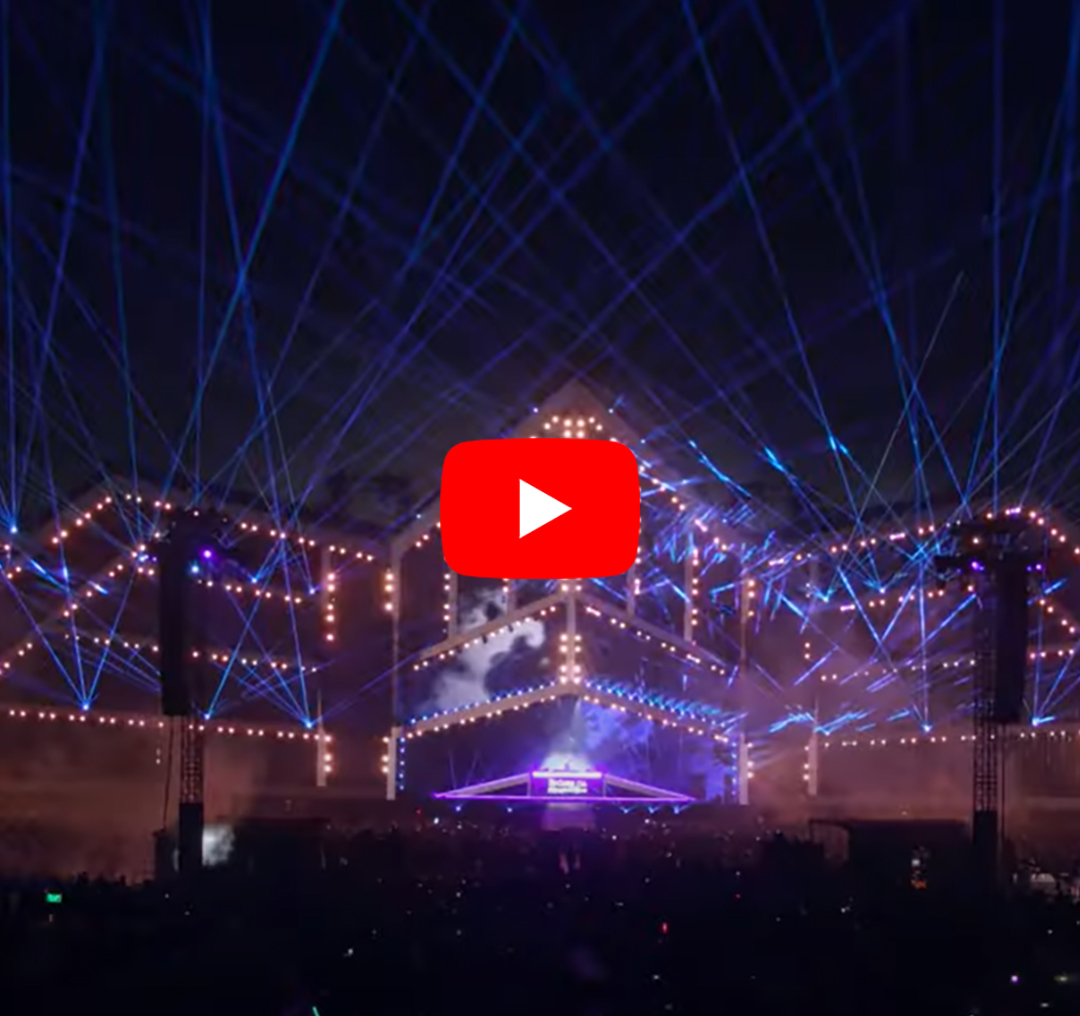
Watch to see how XIP weatherproofing technology kept the dust out at the MDL Beast Soundstorm Festival as told by the LDs that depended on the technology.
But back to inspiration. We were inspired by garden tools like lawnmowers that could be used outdoors with no issue, but our primary reference point was automobiles. A car is very open to the elements but robust enough to be unaffected by weather and dirty use. Why? Because rain and dirt typically don’t find their way into the car and exposed areas are well-protected.
At the same time, cars successfully cope with condensation(fog without affecting their many electronic circuits. All this is only possible because they are ventilated and frequently used. But unlike automobiles, our products are not limited to standing on wheels, so we knew we had to get creative to overcome this challenge.
Where can XIP-enabled fixtures be used to allow customers to feel comfortable about them operating optimally and as intended?
I will use the car again because the analogy is perfect. You can use it anywhere, except underwater! Just like a car, we know that fixtures will typically have a shorter life if used in cold, coastal areas. There is a reason why many people initiate car restoration projects with cars from California in comparison to Martin’s headquarters in rainy Denmark, where salt is often used on the roads in winter.
Likewise, luminaires will last longer if they are not continually exposed to salt (coastal proximities), chlorine (pools), sulfur (acid rainfall) or ammonia (farming), and if they are generally not stored in wet or humid conditions.
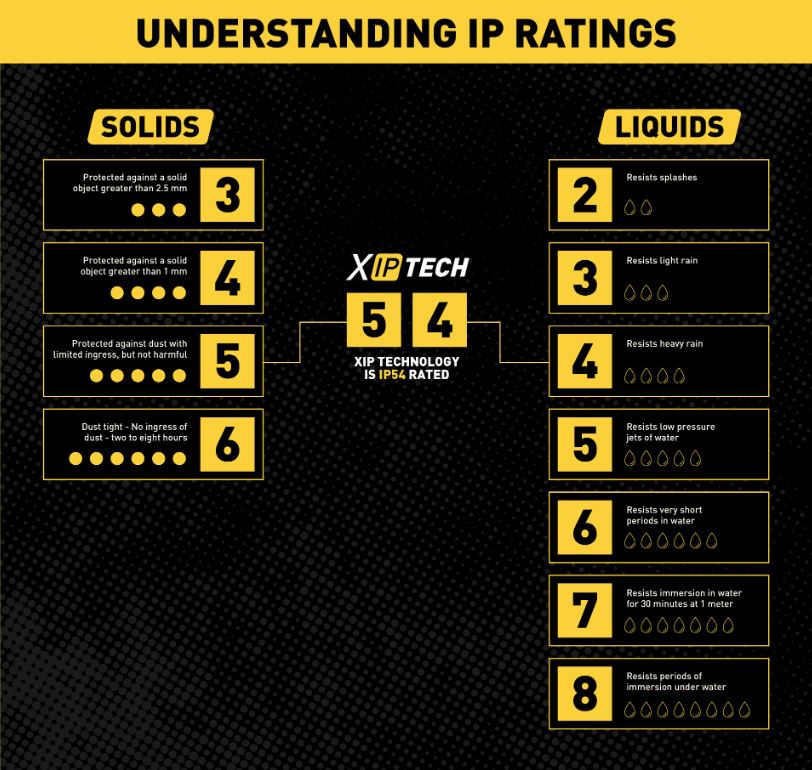
Learn more about IP54 ingress protection for Martin XIP technology as well as a tour of the other IP ratings.
For these reasons, the XIP-enabled fixtures might not be the best choice for extremely harsh permanent outdoor installations where our IP65-rated fixtures are the best choice.
How can XIP-enabled fixtures be lighter and more compact, yet deliver higher lumen output than typical IP65-rated fixtures?
Let’s again look at a car analogy and the headlamp unit. It is made of plastic and is not IP65-rated, yet typically works without interruption for a long service life. This is because of ventilation and defogging when the car is driving and the lamp is on.
And with XIP technology, we are not concerned about moist migration and we don’t have vacuum-tight compartments. For this reason, we can use plastic composites instead of casted aluminum. This offers a huge weight, cost, and sustainability advantage.
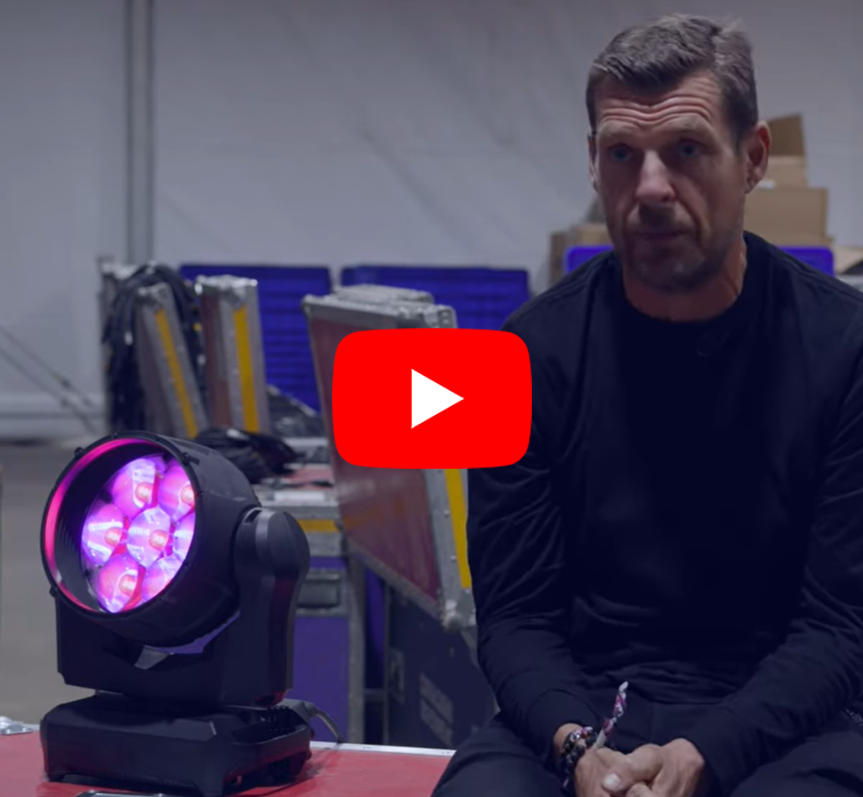
Lighting Designer Stuart Pring shares his appreciation for XIP weatherproofing technology protecting against dust ingress.
Secondly, we remove heat through forced air cooling in the head, where we have all the opto-mechanical components. With IP65 fixtures there is a need for a heat exchanger to do the job, which is both expensive and inefficient. What we often see is a reduction in output when IP65 fixtures get too warm inside.
Also, IP65 products must deal with condensation as well because over time, moisture will get in but cannot get out. We have developed many IP65 architectural luminaires over the years, so we know what we are talking about.
Are XIP fixtures really a great fit for theater, broadcast and other noise-sensitive applications?
Absolutely. XIP fixtures are not sacrificing noise level to achieve proper cooling levels, that is an important part of the ventilated concept. Additionally, look and feel is exactly like indoor Martin products that customers are already accustomed to using. This technology is not a compromise on functionality or performance.
Can you talk about accessibility, how simple is it to service XIP-enabled fixtures and do I need special tools or testing equipment?
You can use the exact same tools as for all indoor Martin products, including Torx 20 driver bits for accessing modules and Torx 10 and 20 bits for the rest of the fixture.
On our MAC Viper XIP, you only need to remove four screws to get full access to the effect module, and there are no specific requirements for the operator. And there is never a need to take the fixture to a shop for vacuum testing after a gobo exchange.

Explore Martin’s first XIP-enabled lighting fixture, the MAC Aura XIP. Watch the video. Get product details and specifications.
XIP-enabled fixtures are designed for temporary outdoor installations – does this mean they can’t be used year-round?
No, they absolutely can be used year-round in all kinds of weather, you just need to power the fixture up, maintain the product as required and not install it permanently outdoors. Again, like your car, if you drive often on salty wet roads, it needs more maintenance and will degrade faster than the same car in a dry, warm, and sunny location. We believe most users have a good understanding of required maintenance and expected lifetime, with the car analogy as an example.
How did you test XIP fixtures for real-world outdoor applications?
For all our fixtures, no matter where they’ll be used or what level of weatherproofing they have, we subject them to a barrage of stress and environmental tests to ensure they are ready to perform in whatever conditions the real world throws at them. This includes climate(humidity, frost, and heat), rain, UV, dust, and salt and mist testing.
We also have a rooftop rig, that we put many of our fixtures in, as a good test for survivability as our R&D in rainy Denmark is not far from the coast. So, all in all, we have incredible confidence in our products’ robustness.
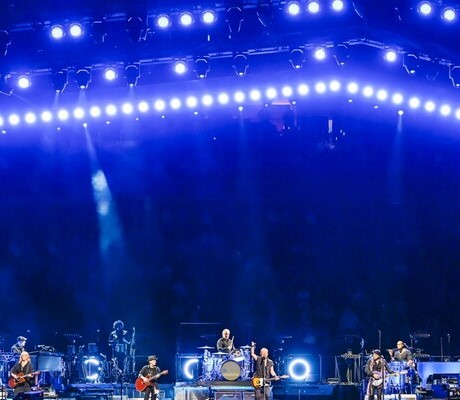
“MAC Aura XIP fixtures … were chosen for their weather-proof performance, which is crucial when we’re in our outdoor stadium configuration,” said longtime Bruce Springsteen lighting designer Jeff Ravitz.
Did you get XIP right the first time or was there trial and error required during development?
During Covid, like most of us, I primarily worked from home for many months. I used a 3D printer to print test parts and my bathroom became a test laboratory. Some of the best inventions were made during this period, so eventually, something good came out of that strange era for all of us.
But yes, we have made so many iterations to get this technology right and now after working with it for several years, I actually often think like a raindrop and ask myself, would I be able to get in that fixture or not?
Thinking creatively has certainly been a guiding factor in the design and innovation process for everyone on the Martin team who has contributed to building XIP technology.
EXPLORE FURTHER
ADDITIONAL SUPPORT
- Martin Training
- Subscribe:
- Sign up to receive our latest updates via email
- Get notified of our latest videos to debut on YouTube
- Connect with Us