Evaluating active vs. passive loudspeaker systems is an essential consideration when designing top-tier touring and sound reinforcement systems. From sold-out concerts and high-profile DJ sets to corporate conferences and permanent installs, understanding key differences when it comes to active vs. passive loudspeakers is important for making well-informed purchasing decisions.
This guide was designed for musicians, DJs, corporate AV managers, and anyone seeking easy-to-follow advice from seasoned pro audio experts. We sat down with Daniel Reed, Production Application Support Specialist with JBL Professional and HARMAN to gain his tenured insights. From a storied career supporting pro audio touring and sound reinforcement clients, Daniel shares key distinctions in design, functionality, and scalability. He also shares recommendations for systems that excel in delivering next-generation performance, versatility, and manageability.
KEY DIFFERENCES & BENEFITS
Q: Daniel thanks for talking with us. Can you explain the main differences when comparing active vs. passive loudspeakers in terms of design, functionality, and components?

Check out Pitbull’s FOH Engineer Will Madera as he discusses his passive loudspeaker system of choice when supporting Pitbull on tour.
A: Thanks. I’m glad to be here. Passive loudspeakers have no active internal electronic components and require external amplifiers. They allow users to mix-and-match amplifiers and processing for specific performance goals. These systems generally require less cabling and can be less heavy than their active equivalents.
Active loudspeakers feature built-in amplifiers and digital signal processing (DSP). They are self-powered, meaning they do not require external amplification. Some active systems offer a variety of advanced controls or DSP to optimize the system, while others are designed for simple “plug-and-play” use. Active systems generally require less training and experience to deploy safely and effectively, allowing a wider user base to achieve consistent success.
OPTIMAL USE CASES
Q: Which applications are best suited for active systems?
A: Active systems perform best in deployments where minimal setup time and portability are the highest priorities. Active speakers offer a streamlined and efficient solution—minimizing setup time and simplifying logistics. It’s a smart and reliable way to keep things consistent and sounding great with less hassle.
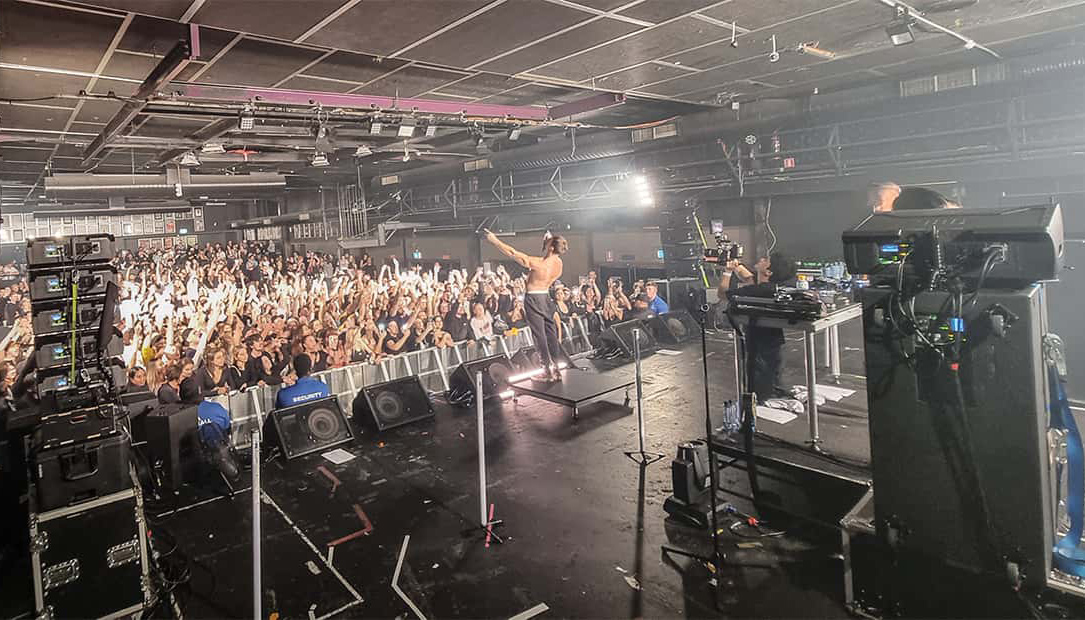
“I kept asking myself ‘surely that’s not enough PA for this kind of band?’ But sure enough… it was the right amount of PA and everyone was delighted. I went home thinking ‘that PA is amazing!’” said Andrew West of Signal Systems. Learn more about his active loudspeaker system selection.
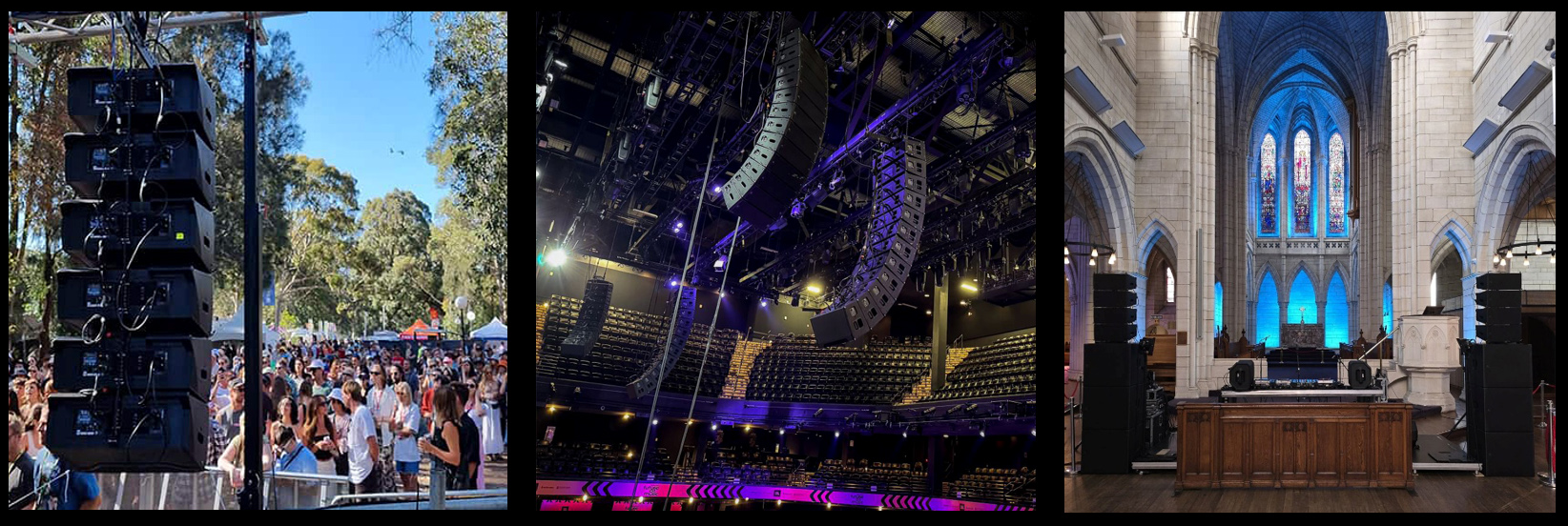
Examples include portable PA systems for traveling musicians, DJs, and small-to-medium sized productions. They also perform well in corporate AV environments like ballrooms and conference rooms and permanent installations like houses of worship, rock clubs, and other venues where turn-key solutions are required.
Q: Where do passive systems excel, and why might a buyer choose these systems for those situations?
A: Passive loudspeakers are worth considering for outdoor deployments with possible continued exposure to harsh weather conditions. These systems excel in situations where the same amplification infrastructure powers a variety of different loudspeaker products. Passive systems are also well-suited for permanent installations where it is not possible to run signal and power to the loudspeaker location.
INSTALLATION, MAINTENANCE & RELIABILITY
Q: How do installation, setup, and scalability differ when comparing active vs. passive loudspeakers?
A: Active systems have fewer individual components, which simplifies connections. Typically, they only require power and input signal, some advanced models may have an optional network connection for system monitoring and control. This minimizes infrastructure requirements and makes deployment faster, though it offers less flexibility in terms of system configuration.
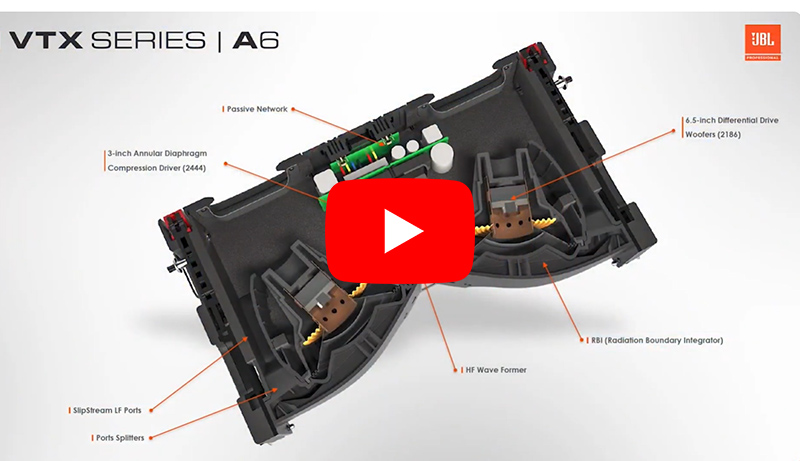
Check out this deep-dive discussion on behind the technology driving the JBL VTX A-Series passive loudspeaker system.
Passive systems require amp racks, peripheral DSP units for control, and specific cabling for the loudspeaker. They require more methodical planning to match power and impedance. The setup time is typically longer than that of active systems, but they are more versatile in larger-scale applications. Passive systems offer an advantage in permanent installations where access to the loudspeaker is difficult, as the amplifiers typically aren’t in hard-to-reach locations, such as flown arrays.
Q: How is long-term reliability affected in active and passive systems depending on the inclusion or exclusion of built-in amplification and DSP?
A: There are no inherent differences in failure rates between the two approaches; however, there are a few differences to consider. Because active systems have essentially merged two separate devices into one, there is natively a higher risk for a failure, rendering the entire device unusable.
Alternately, since every speaker is individually powered, one amplifier failure has no impact on the rest of the system, unlike typical passive system configurations. Passive systems generally have a higher IP rating, making them more suitable for wet conditions.
SYSTEM SPOTLIGHT:
JBL SRX900 Series Powered Line Arrays & Subwoofers
We asked Daniel for his thoughts on an ideal system that combines a high degree of flexibility with support for users with varying levels of technical expertise. We also wanted a system that was adaptable to diverse applications and venue types. He shared his insight on an active system – JBL SRX900 Series Powered Line Arrays and Subwoofers.
Standout Features & Applications
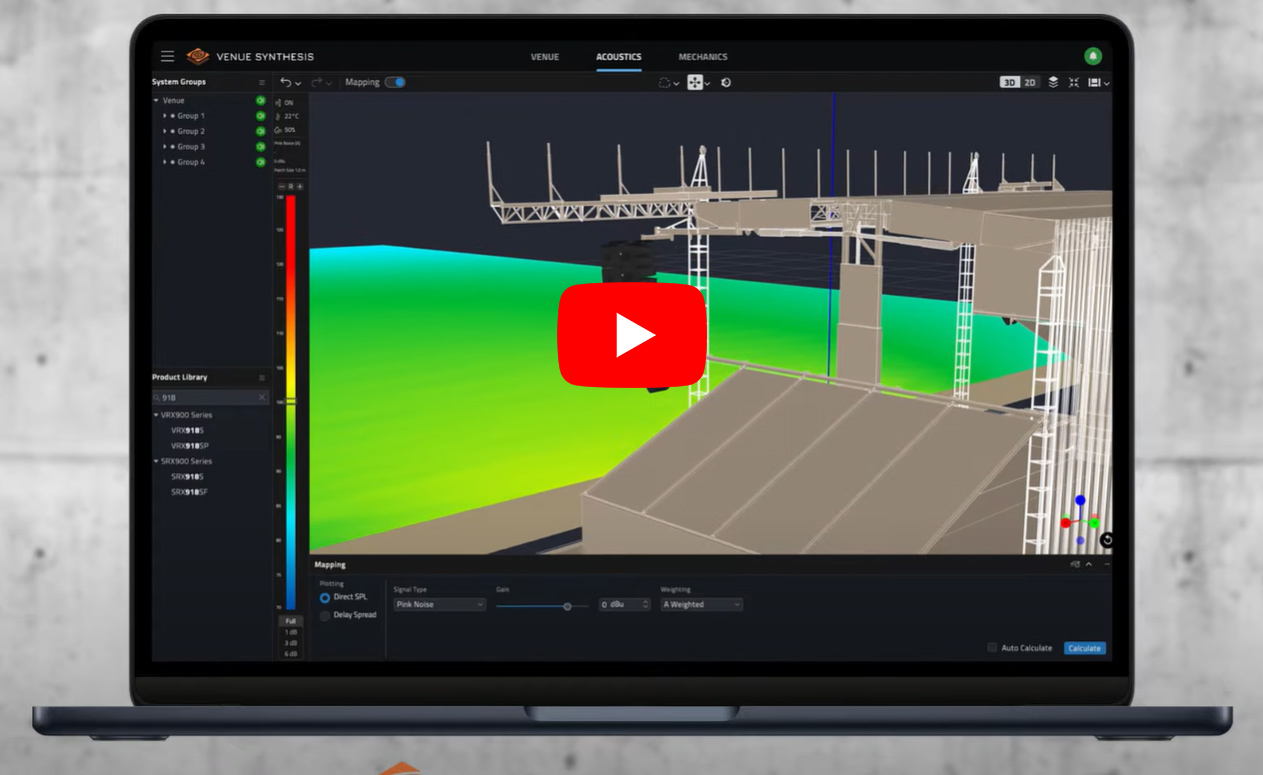
Watch this detailed SRX900 Technical Overview Video that covers everything you need to know to design and specify applications using the SRX900 active speaker system.
Q: What unique features of SRX900 systems set them apart from other active systems?
A: SRX900 systems are packed with an incredibly powerful DSP toolset and a very power-efficient amplifier. Purpose-built transducers and waveguide technology adapted from the premium JBL VTX line create sonic characteristics previously unavailable at this price point. While these features make SRX900 a unique product that is ideal for advanced users, it remains “plug-and-play” and is easy for beginners to use effectively.
Q: What applications is the SRX900 Series best suited for and what makes these systems particularly effective in these settings?
A: SRX900 systems are extremely flexible and suitable for most scenarios, ranging from simple “point-and-shoot” solutions to large shows with thousands of attendees. They are more than capable of meeting the demands in environments like corporate AV, rental-house applications for small-to-mid sized concerts, or houses of worship.
The Series also excels in fixed installation environments like clubs, theaters, and small-to-mid sized event spaces. SRX900 systems are ideal for users who need a plug-and-play solution with minimal equipment and set-up and tear-down time.
Scalability & Flexibility
Q: How easy is it to scale SRX900 systems up or down to meet different venue sizes and requirements?
A. SRX900 systems are extremely flexible, capable of small pole-mounted systems all the way up to 16-box line arrays—and everything in between. This is made possible by the full suite of accessories, including array frames, base plates for ground stacking, pull-back devices, and pole mounts that allow users to build a system, scaled perfectly to match the needs of their venue or event.
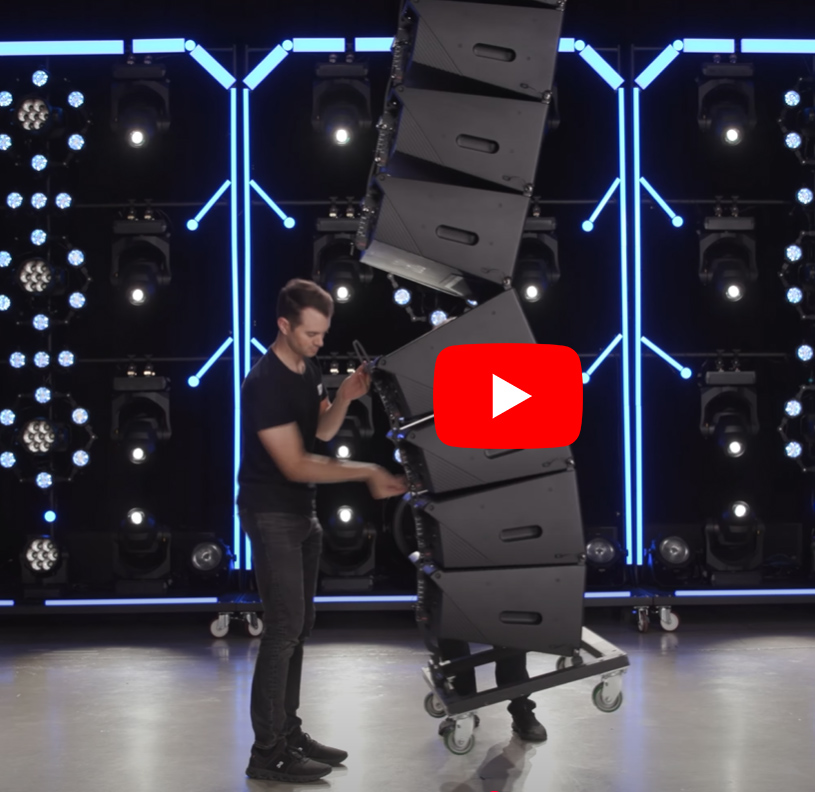
Check out the newest additions to the SRX900 Family – the new flyable 15” subwoofer (SRX915SF) and flyable 18” subwoofer (SRX918SF) – in this SRX900 Rigging & De-Rigging video.
The SRX900 Series features two sizes of full-range products: the SRX906LA (dual 6.5”) or SRX910LA (dual 10”). Each model will offer different capabilities in terms of frequency response and horizontal coverage.
For subwoofers, four different options are available: a flyable 15” sub (SRX915SF), a flyable 18” sub (SRX918SF), and two ground-only options—a single 18” (SRX918S) or a dual 18” (SRX928S) subwoofer. The entire line has been designed to work together, allowing users to mix and match devices so each need is matched with the appropriate solution.
Digital Signal Processing (DSP)
Q: Can you explain how SRX900 Series onboard DSP enhances sound quality and system control?
A. The advanced DSP suite includes tools to control, optimize, and monitor the system in real time with JBL Performance Software. Factory-tuned presets give users a great starting point to get the system up and running quickly and efficiently.
All the tools needed to optimize a system are available out of the box. Gain, delay, EQ, and advanced calibration tools—such as array size compensation and throw distance compensation—are accessible on every speaker within a system. The DSP and amplification suite is built to last and LevelMax limiters ensure the components stay protected even in the harshest show conditions.
WRAPPING UP & EXPLORING FURTHER
Choosing active vs. passive loudspeakers comes down to aligning your sound reinforcement needs with the strengths each approach offers. We hope this guide empowers you to make informed decisions with regards to design, scalability, and ease of deployment.
Here are some additional resources to support your research and purchasing journey. We look forward to learning more about how we can better support your needs in the future.
Details & Specifications:
- Active System Spotlight: JBL SRX900 Powered Line Arrays & Subwoofers Product Details & Videos
- Passive System Spotlight: JBL VTX Line Arrays & Subwoofers & Crown Amplifiers
- JBL Tour & Sound Reinforcement Software & Design Applications
- JBL Tour & Sound Reinforcement Portfolio
- JBL Videos
- JBL Case Studies
- JBL Training Resources
- Anytime Help Center
Connect with Us:
- Sign up to receive our latest updates via email
- Get notified of our latest videos to debut on YouTube
READY TO TALK TO A SOLUTIONS EXPERT?
We’d love to discuss your projects and ideas. To locate a representative near you, please visit our WORLDWIDE LOCATOR.